SHOCKING NEWS
In a review of Chris Hayes’s The Siren’s Call: How Attention Became the World’s Most Endangered Resource was this startling research: In 2014, a University of Virginia study asked subjects to sit for 6 to 15 minutes on their own, without devices, reading material, or anything else. They had with them only their thoughts. After, they were asked to rate their experience. Six in 10 said it was difficult. Nearly half said it was downright unpleasant.
But the study went further. Repeating the exercise, participants were now given a choice between a reprise of undisturbed time, or self-administering a mild electric shock in the midst of it. Two-thirds of the male participants and one-quarter of the women chose the shock. (Isn’t that gender difference interesting?) Solitude was so troubling that they preferred discomfort to quietude.
Perhaps it is this aversion to being alone with one’s thoughts that is behind one result in the 2023 American Time Use Survey, prepared by the Bureau of Labor Statistics, in which 8 in 10 people said they did not use any part of their day to relax or think.
I am a bit of a crank on the question of the assault on our time and attention by social media companies and others. Just ask my kids and they may roll their eyes and parrot with some sarcasm, “Time is precious. Life gives you only a fixed amount of it. Use it well!”
Yes, the intentional and avaricious occupation of our time and mind by those looking to profit from it is outrageous. But, as it is said, it takes two to tango. There is take, but there also is give. Many people really do not like moments of quiet reflection and will gladly trade them on the cheap for diversionary videos, arousing news feeds and blogs, and even, as in the UVA study, mild electric shocks.
Here’s what concerns me about all this: Setting what we may do with our personal lives aside (along with my speechifying…), in my view this aversion to contemplation reduces the effectiveness of our work in organizations.
WILD TIME
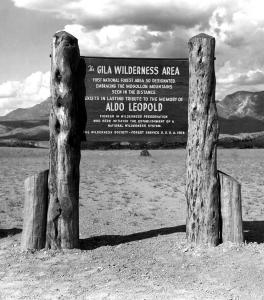
2024 marked the 60th anniversary of the passage of the Wilderness Act. And a hundred years since the first wilderness area was established in New Mexico’s Gila National Forest. The Gila’s main proponent was Aldo Leopold, then a young Forest Service employee. Observing the rise of the automobile and its associated infrastructure, like many hunters back then, what troubled Leopold was that if nothing was done it would soon no longer be possible to go for an extended hunting trip and not come across a road. He argued that the Forest Service should consider wild space a natural resource just like the forests, grasslands, and minerals the agency was charged with stewarding. His advocacy eventually led to the designation of 800,000 acres within the Gila as roadless wilderness.
Roads afford a multitude of benefits. But in the wild they are an intrusion into nature’s functioning and an attack on solitude. Like roads, information and communications technologies have brought us many enrichments and advances. They also detour attention, rigidify beliefs and ideas, and regress feeling and behavior, disrupting our ability to think and stealing our finite, non-renewable resource of time.
During her fight against roads in Olympic National park in the late 1950s, the inspiring and eloquent Pacific Northwest conservationist Polly Dyer described the forest there as “untrammeled.” When it came time to encode the notion of wilderness in law, this word, perhaps the crucial one, was borrowed by Wilderness Society staffer Howard Zahniser, who helped craft its language. My favorite Webster’s dictionary, a beat-up edition from around then, tells me that trammel is “something impeding activity, progress, or freedom,” a restraint. Untrammeled, then, is something unrestrained and free.
It seems to me that within organizational life, managers could benefit from a bit of untrammeled time, a little mind-wilderness, so to speak. So, I advocate that you consider your work-life a sort of national forest, and that within it you establish a wilderness of time. You establish your wilderness in the straightforward manner: block off time on your calendar, shut down the computer, silence and put away devices, close the door, and sit comfortably. Within the solitude of this space, daydreamy capacities may connect with waking reason to help begin to make sense of experience.
Regarding the “electric-shock” problem, my guess is that it is the emptiness of the space that people find daunting, not the space itself. For what I am suggesting to work, two things are needed. One is to start small. Set aside just 10 minutes. Knowing the expanse of time ahead is small and manageable will make it easier to cross into it. The second thing is likely more important: content. Blank space just won’t do in this context. To enable and make good use of content, it will be useful to have a frame – not so thought-directing as an agenda, more like one of those old freestanding coat racks. A frame to hang thoughts on. The frame works like this. Train your mind, gently, on what you are trying to accomplish at work, this week, this year, or somewhere in between. As you do so, open yourself to the thoughts and feelings that emerge.
To help you imagine all this more concretely, let me describe an example of one “coat” you may hang on your “rack” and contemplate.

RESISTANCE IS FERTILE
Psychoanalyst Adam Phillips begins his recent essay, “On Resistance,” by stating the obvious – that resistance is an effort to stop something. In our organizations, we’ve all seen this. But resistance shouldn’t be dismissed, as it all too often is, as merely an obstructionist reflex. There is much more to it, and in its many crevices are rich caverns of behavior and perspective to explore.
There is an earnestness to resistance, though it may be myopic. “Resistance at least implies that there is a good one knows and wants to protect, even it if doesn’t imply that you know you could be wrong,” Phillips observes. In many instances, resistance is intellectual integrity. Phillips shines a light on resistance as “the process of finding something out … as a form of curiosity.” Rather than retrograde, in resistance-as-research there is constructive rigor. An intense and ragged rigor at times to be sure. “We resist people as a provocation,” Phillips writes, “as a way of getting them to reveal themselves.” Resistance is a beacon, an indicator. “If there is no resistance,” Phillips writes, “we are not dealing with the most meaningful issues.”
In gaining a deeper understanding of resistance there is the potential to foster development, whether in individuals, Phillips’s concern, or in organizational life, my concern. When we have insight into where resistance is at work, either healthfully or unhealthfully, and what its underlying its purpose is, there is growth.
Let’s return to the coat rack and some specifics. I suggested training your mind on what you are trying to achieve. Now, introduce into it the idea of resistance. Here are a few crevices you might explore:
- Consider what resistance may be going on around what you are trying to achieve. Seek nuance. “If you describe something as resistance, what are you describing it as?” Phillips asks. For instance, is it a kind of inability or an unwillingness?
- Take yourself more deeply into it. “When one is defending against something one is always defending something else,” Phillips says. What might that be? And why does it matter to the resistor?
- We sometimes resist things we actually need, but keep ourselves from acknowledging this. What is the need? In your circumstance, what keeps people from acknowledging it?
- To advance toward your aims, what should you, your team, or the organization be doing but are avoiding? What is behind the avoiding?
- Bring yourself closer to the actions and experiences that arise as you consider resistance. What feelings emerge as these things enter your mind? Consider your own resistances. If they are, as Phillips suggests, a “process of finding something out,” what is it you are trying to find out?
On other hooks on your “coat rack” you may in time hang other conceptual coats. Your mind-wilderness may expand. You will know when this will help you.
FOUNDER GEORGE (not that one…)
I have had founders on the brain for more than a year now. For idiosyncratic reasons (a long story for another time) I took up a door-stop of a biography of James Madison, the system-design genius behind the Constitution, among other things. With their close relationship as a bridge, from this I moved naturally to Thomas Jefferson, the genius of our republican ideals (small “r”…), among other things. What strikes me, among other things, is the profound imprint founders leave on institutions, whether nations, or organizations, or even grassroots community groups.
George Gabriel was a founder of the community garden in which I volunteer. He died recently. George was not Princeton-educated like Madison. He wrote no revolutionary charters like Jefferson. He spent time in the navy, ultimately stationed in Staten Island. He met his wife Julia not long after he left the service, and he worked as a dental technician to support his family. He and Julia raised their kids in a modest apartment in the corner building at 111th Street and Amsterdam Avenue.
When in the 1960s Columbia University and the Cathedral of St. John the Divine hatched an expansion plan that would require levelling all the buildings from Columbia to 110th street (including his), George and Julia and others fought back. They were evicted and moved to the nearly abandoned building next door. Their old building was razed. But in the end Columbia and the cathedral retreated. And on that corner-lot rubble – rat-filled rubble, George liked to remind us frequently with relish – Julia and George began to build a garden.
George loved to tell stories – about the fruits and flowers of his Hawaiian childhood home, about his experiences at sea, about his early years in New York, about the origins of the chunks of sculpture and the seemingly nondescript shrubs in the garden. He would sit there with you on a bench, his little dog at his feet, and, with animation, tell stories. Occasionally, increasingly, he told stories more than once.
George liked to needle impishly, straight-faced, then smiling. Not long after I started gardening there, he asked if I might plant some red flowers, his favorite color. I tried. Cardinal flowers thrived, then disappeared. Same with crimson bee balm. “I thought you were going to plant some red flowers,” George would ask innocently, poking at my sense of failure. And then he would wink.
George loved to chat. He loved sometimes to just sit and enjoy the garden. He welcomed visitors and gardeners. He wondered at the workings of nature, especially plants. He was unpretentious, anti-pretentious even. These things gave the garden a lasting ethos. The place bears his imprint. And in some ways so do I. The founder’s indelible imprint.
This spring I will give red another try.